


THE LIFE I CANNOT GIVE BACK
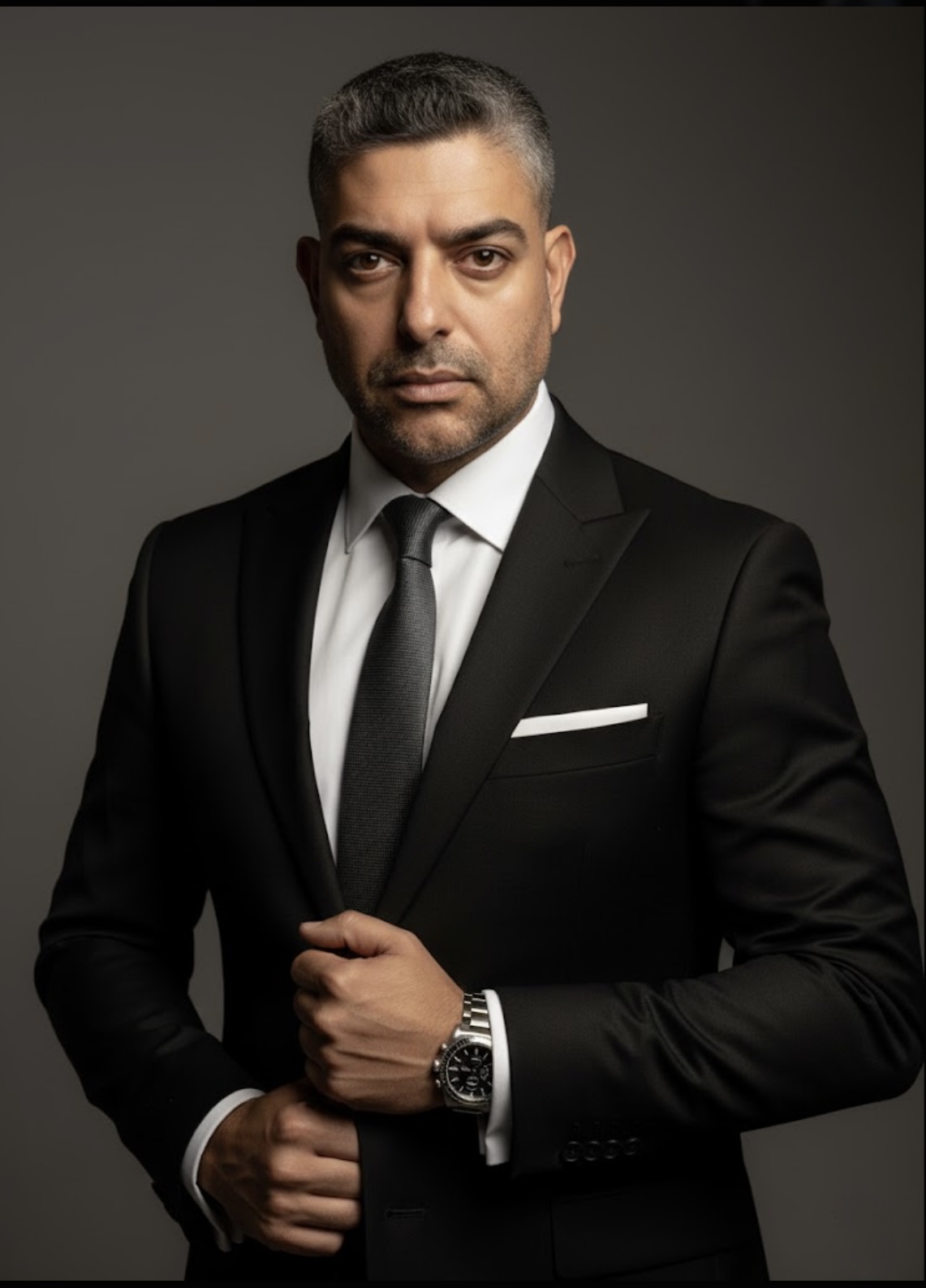

THE DAMIEN BLAAUW CODEX
CHAPTER IX · PART TWO
THE LIGHT IN HER EYES
Grieving the Future I Once Imagined for My Daughter
THE HOOK
There are things you expect to worry about as a father.
You worry about whether your children will be happy. Whether they'll find their place in the world. Whether they'll make good decisions, fall in love, build careers, travel, make mistakes, and eventually become independent enough to stop needing you for everything.
You worry about the big things. You worry about the small things.
What you don't expect is to find yourself wondering which parts of that future your child might never get to experience.
My daughter used to talk to me about not being able to get her driver's licence. About having a car of her own.
And now, every time it comes up, I am reminded that the things she has lost are not confined to hospital beds, rehabilitation appointments, or the physical consequences of what happened to her. They reach into the ordinary life she should have been looking forward to.
The freedom to get behind the wheel. To go somewhere because she wants to. To make plans without first having to consider who will take her, how she'll get there, or what assistance she'll need.
For many young people, these things are milestones. For my daughter, they have become painful reminders of how much her life has changed.
And while she talks about the driver's licence and the car, I find myself thinking about everything else. The opportunities. The relationships. The experiences. The independence that I once imagined would gradually become hers.
I cannot tell her that everything will work out exactly as she once hoped. I cannot promise her a future I don't control.
I can only listen to what she says, carry the fears I don't always know how to express, and try to understand what it means to watch your child grieve a life she thought she would have.
Because I am her father.
And some days, loving her means facing the fact that I cannot protect her from the grief of what has happened, no matter how desperately I wish I could.
THE WOUND
There is a particular kind of helplessness that comes with being a father and realising that love, no matter how fiercely you feel it, cannot undo what has happened to your child.
I can fight institutions. I can challenge decisions. I can ask questions, demand answers, push for treatment, and refuse to accept things simply because someone in authority tells me to. That is what I did for my daughter. When her life was at stake, I fought because there was no other option in my mind. Giving up was never on the table.
But what do you fight when the immediate crisis is over and you are left confronting the consequences?
How do you fight for the opportunities she might have had? How do you fight for the independence she should be discovering for herself? How do you negotiate with the future when you don't know what it holds?
I look at her life now, and I think about all the things that most parents quietly anticipate as their children grow older. Getting a driver's licence. Having a car. Going where you want to go without having to arrange your life around somebody else's availability. Building relationships, pursuing opportunities, making mistakes, discovering who you are away from your parents.
These things sound ordinary until you begin to understand how much they mean.
When she talks about not being able to get her licence or have a car of her own, I hear the disappointment in what she believes she has lost. I cannot simply dismiss it by telling her there are more important things in life. That would be an easy response, and an unfair one. She has already had to confront things that no young person should have to face in the way she has.
She is allowed to want the ordinary things, too.
She is allowed to want freedom. She is allowed to want independence. She is allowed to look at other people her age and wonder why their lives seem to be moving forward while hers has been forced down a different road.
And I am allowed to grieve what I fear this means for her.
That is the part I don't always know what to do with. My grief is not the same as hers. She is the one living with the consequences in her body and in her daily life. I am her father, watching, helping, worrying, and trying to make sense of a future I can no longer picture with the same certainty.
There are opportunities I fear she may miss, experiences I wonder whether she will get to have, and forms of independence that I can no longer assume will come naturally with age. I think about the relationships she may struggle to build and the plans she may have to reconsider. I think about how much of life depends on being able to do things that other people rarely stop to appreciate.
I cannot know exactly what her future will look like. But I would be lying if I said I wasn't frightened by the possibilities.
And perhaps that is one of the hardest things to admit as a father: sometimes the fear isn't that your child will die. Sometimes it is the fear of what surviving will mean for them.
You are grateful they are still here. You thank God they survived. You hold on to the fact that there is still a life to live.
And yet, alongside that gratitude, there is grief.
Not because the child you love is gone. She isn't.
But because the life you once imagined for her has changed, and you don't know how much of it she will be able to reclaim.
I want my daughter to have a life that belongs to her. I want her to experience as much independence, joy, connection, and possibility as she can. I want her to have reasons to look forward to tomorrow that have nothing to do with rehabilitation, medical appointments, or what she needs help doing.
I want her to be able to dream without every dream first having to pass through the filter of what happened to her.
And I want to stop being afraid of the future on her behalf.
But wanting those things does not make the fear disappear.
It simply means I carry it alongside the hope, often without knowing which one will be heavier on any given day.
THE MIC DROP MOMENT
I spent so much time fighting to keep my daughter alive that I never prepared myself for the grief of watching her struggle to live the life she deserved.
I knew how to fight for her survival. I knew how to challenge people, demand answers, and push for the care she needed. I knew how to keep going when stopping wasn't an option.
What I didn't know was how to live with everything I couldn't fix.
I cannot undo what happened to my precious daughter. I cannot give her back the certainty she once had about her future. I cannot promise her that she will experience every opportunity, every freedom, and every milestone I once assumed would be part of her life.
And when she talks about something as ordinary as getting her driver's licence and having a car of her own, I am reminded that the consequences of what happened to her are not measured only in medical reports or rehabilitation progress.
They are measured in the ordinary freedoms she wants, the independence she longs for, and the future she is trying to make sense of.
I could fight for my daughter's life, but I could not fight away every loss that came with saving it.
That is a truth I struggle with because fathers are supposed to fix things. We want to protect our children from pain, remove the obstacles in their way, and give them the tools to build lives of their own.
But there are battles in which love is not a solution. It is simply the reason you keep showing up when you have no solution to offer.
I cannot give my daughter certainty. I cannot tell her exactly what her future will look like. And I cannot allow my fear of what she might lose to become the only lens through which I see her.
She is still here. She is still my daughter. Her life has changed, and so have the possibilities we once took for granted, but she is more than the things that happened to her and more than the things she may struggle to do.
I have to remember that, especially on the days when my own grief threatens to speak louder than her possibilities.
Because this is not only about the future I fear she may have lost.
It is also about the future she still deserves the opportunity to discover.
WHAT I KNOW NOW
I have learnt that being a father does not mean having the answers. Sometimes it means standing beside your child while both of you face questions you never expected to have to ask.
Before all of this happened, I had a picture in my mind of what her future might look like. Not a detailed plan, but the sort of things you imagine when you watch your children grow up. The independence they will develop. The opportunities they will pursue. The relationships they will build. The experiences that will shape them into adults.
You don't usually stop to consider whether they will be able to drive a car, travel independently, or do the ordinary things that mark the transition into adulthood. You assume life will unfold, with the usual complications and disappointments along the way.
Then something happens that makes you question assumptions you never even realised you were making.
I know now that I cannot measure her future against the life I once imagined for her. That life was built on expectations I no longer have the luxury of taking for granted. Holding on to those expectations too tightly risks turning every difference between the life I imagined and the life she lives into another source of grief.
But accepting uncertainty is not the same as giving up.
I still want her to have independence. I still want her to experience relationships, opportunities, joy, and the freedom to make choices for herself. I still want her to discover what she can do, rather than have her future defined by what other people assume she cannot do.
I don't know how much of that will be possible. I won't pretend otherwise.
What I do know is that she deserves the opportunity to find out.
I have also had to confront something uncomfortable about my own role as her father. My instinct is to protect, to intervene, to solve the problem. When I cannot solve it, I feel the frustration of having failed to do what I believe a father should do.
But I cannot solve every problem she faces. I cannot make every disappointment disappear. And I cannot carry every fear on her behalf without risking the mistake of treating my fears as though they are the boundaries of her life.
She has her own experience of what happened to her. She has her own disappointments, her own hopes, and her own relationship with the future. I need to listen to those things, even when they hurt me to hear, without assuming that I understand every part of what she feels.
When she talks about wanting a driver's licence and a car, I don't need to explain why other things matter more. I need to recognise what those things mean to her. I need to take her wishes seriously, even when I cannot promise that they will become reality.
Perhaps that is another part of fatherhood I am still learning: loving your child means making room for their experience, even when you are struggling with your own.
I know now that gratitude and grief can exist together. I can be profoundly grateful that my daughter survived and still mourn the certainty I once felt about her future. I can celebrate her progress without pretending that the challenges have disappeared. I can hope for possibilities I cannot guarantee.
And I can admit that some days I am frightened.
I don't have a grand conclusion to offer. I haven't found a way to make peace with everything that has changed, and I am not going to pretend that writing a few paragraphs has suddenly made the uncertainty easier to bear.
I am still her father. I am still going to show up. I am still going to fight for the care, support, and opportunities she deserves.
But I am learning that fighting for her does not mean deciding in advance what her life can or cannot become.
My job is not to guarantee her future. It is to help her have as much of a future as possible, without allowing my fear to become the limit of what she is permitted to imagine.
I wish I had learnt that under easier circumstances.
I wish she had never had to endure what she did.
But this is where we are, and I have to meet her here, in the life we have now, rather than spend every day grieving the life I thought we would have.
THE REFLECTION
There are moments when I think about the kind of father I wanted to be and the kind of father circumstances have forced me to become.
I wanted to protect my children. I wanted to give them opportunities, teach them what I knew, help them avoid some of the mistakes I made, and watch them build lives of their own. I wanted to see them become independent, make their own decisions, and discover the world without having to think about all the things that could go wrong.
I never imagined that loving one of my children would mean spending so much time wondering what the future might look like for her now.
I struggle with that more than I sometimes admit.
There is a part of me that wants to find a solution to everything my dear girl has lost. I want to make up for the opportunities that may have been taken from her. I want to remove the barriers between her and the independence she wants. I want to give her the reassurance that her life can still be full of experiences, relationships, and possibilities.
I want to make it right.
But I cannot go back to the day everything changed. I cannot undo what happened, and I cannot negotiate with the past until it gives me my daughter back exactly as I remember her before the haemorrhage.
That last part is difficult to write because I know how it sounds.
She is here. She is my daughter. I love her, and I do not want my grief to make her feel that the person she is today is somehow less than the person she was before.
Yet I miss the certainty I once had about her future. I miss being able to imagine the years ahead without immediately thinking about the limitations she faces, the support she may need, or the obstacles that might stand between her and the life she wants.
I miss the innocence of believing that if I worked hard enough, protected her enough, and did everything a father was supposed to do, she would have the chance to make her own way in the world.
Perhaps that is the loss I struggle to explain. It is not one particular milestone or one specific experience. It is the uncertainty that now follows so many of the things I once took for granted.
And then there is my daughter herself, talking about the driver's licence and the car she wants.
I cannot make that disappointment disappear. I cannot tell her that it doesn't matter, because it matters to her. I cannot offer empty assurances simply to make the conversation easier for me.
All I can do is hear her.
Sometimes, I think that is the cruelest part of being a parent in circumstances like these. You spend years trying to protect your children from the things that might hurt them. Then life introduces a kind of pain you cannot remove, and you have to learn how to stand beside them without pretending you can make it go away.
I wish I could give her certainty. I wish I could tell her that every dream she has will remain within reach. I wish I could promise that the things she feels she has lost will somehow find their way back to her.
But I cannot make those promises honestly.
What I can promise is that her life will not be measured only by what happened to her, at least not by me. I will continue to advocate for her, support her, listen to her, and look for possibilities we may not yet understand.
And I will try to remember that she is entitled to her own dreams, even when those dreams frighten me.
I am her father. I will always want to protect her from disappointment, hardship, and pain.
But I am also learning that I cannot live her life for her, and I cannot grieve every possible loss before it has happened.
I have to leave room for her to surprise me.
I have to leave room for life to be different from what I fear.
And on the days when I cannot find that room, I have to be honest enough to admit that I am struggling, rather than disguise my fear as certainty.
I don't know what her future holds.
I know what I hope for her. I know what I fear for her. And I know that I would give almost anything to make the road ahead easier.
For now, perhaps that is where I have to stand: loving her, fighting for her, grieving what has changed, and refusing to pretend that I know how the story ends.
THE CODEX TRUTH
You can spend your life trying to protect your child from a future you fear, only to discover that loving them means leaving room for a future you cannot predict.
ONE HARD TRUTH
You can fight for your child's future with everything you have, and still have to live with the fact that you cannot guarantee what that future will look like.
THE ARTICLE SYMBOL
The Light Beyond the Window
A young woman sits beside a window. Beyond it lies a world full of roads, destinations, experiences, and possibilities she cannot yet know how to reach.
The window represents the future: visible, real, and tantalisingly close, yet uncertain.
The light represents possibility. It is deliberately restrained, not a grand beam of divine intervention or a promise that everything will work out. It simply exists, falling across the window and illuminating part of the world beyond it.
In the foreground, the father's silhouette stands in shadow. He is present, protective, and watchful, but he is not standing between his daughter and the window. He cannot choose her future for her. He can only stand beside her as she discovers what remains possible.
The image should not portray her as broken, defeated, or defined by disability. Nor should it suggest that determination alone can erase the consequences of her haemorrhage. Its power lies in the tension between the world she wants to experience and the uncertainty of how much of it will be accessible to her.
The visual direction
Palette: Predominantly black and white, with a restrained muted-gold glow representing warmth and possibility.
Style: High-contrast neo-noir graphic novel, hard shadows, distressed ink and halftone textures.
Composition: Daughter and the window are the emotional centre. The father remains secondary, present without dominating the frame.
Mood: Intimate, contemplative, bittersweet. No melodramatic tears or manufactured triumph.
Symbolic restraint: The window is neither a prison nor an open door. It represents a future that is still uncertain.
The Cracked Pillar in Part One represented the father who kept standing while carrying damage nobody could see.
The Light Beyond the Window represents the future he wants for his daughter, the possibilities he fears she may lose, and the uncertainty he must learn to live with.
One image shows the cost of carrying the weight. The other shows why he carries it.
The gold remains. Not as a guarantee, but as a reminder that uncertainty and possibility can exist in the same frame.
THE QUESTION I LEAVE YOU WITH
How do you keep believing in your child's future when you can no longer be certain what that future will look like, and how do you make room for their possibilities without allowing your own fears to define their limits?
I spent years fighting to become enough.
Now I understand.
I was never supposed to become enough. I was supposed to realise that I already was.
For the men rebuilding themselves... one hard truth at a time.
THE DAMIEN BLAAUW CODEX
No masks. No excuses. No bullshit.
I walk the path now, knowing that what ever has to happen will happen. I can only control that which exists in my realm of control. I will watch this new future unfold with my daughter as she writes it. Ciao!
Damien.


Comments